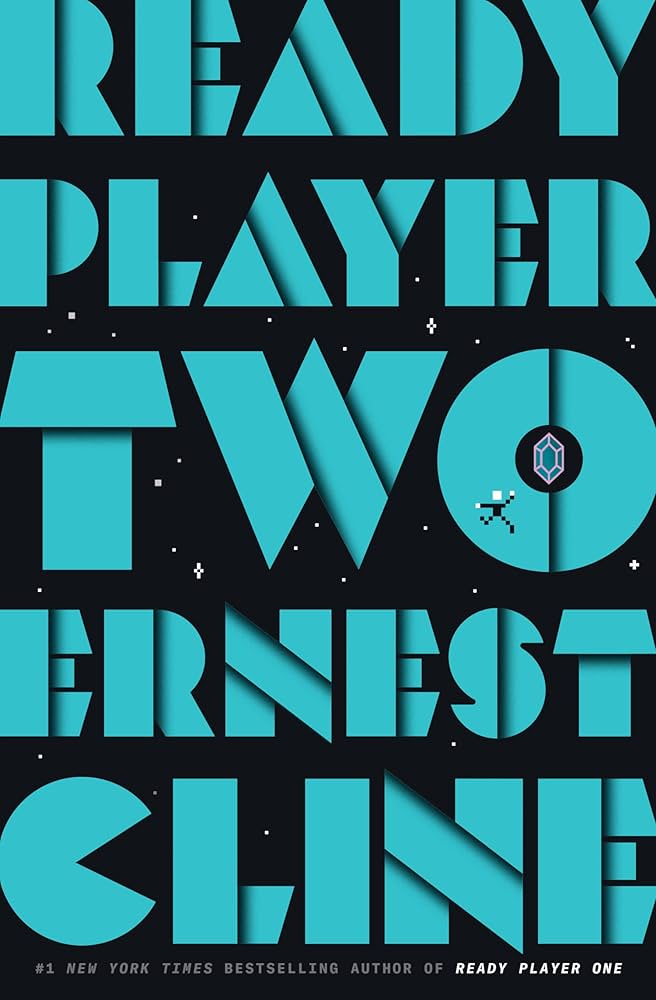
My first exposure to the first book, Ready Player One, was in movie form when my uncle dragged me to see it, and I originally gave it a B+, but upon retrospect, it turned into an A+ favourite. I then read the book and appreciated it was fairly different and gave it nine out of ten, though I liked the screen version more. I then read Ernest Cline’s other book Armada, and it was disappointingly boring. Now I finally returned to the world of the OASIS, and I guess the charm of nostalgia and game-warrior vibe that came from the first story is just not fresh anymore.
The world-famous previous book had teenager Wade Watts from The Stacks of Columbus, Ohio, win the big contest left by the late James Halliday, creator of the virtual reality world that has commandeered the way the whole word functions in the 2040s. He and his team of Art3mis, Aech and Shoto (rest in peace, Daito) ended up winning the leadership titles. Shortly after winning the contest, however, Wade found an engraving on the big Easter Egg that got him in control, which led him in the real world to a different type of virtual reality helmet, one that Halliday left behind in secret. And it’s one that connects to your brain and allows you to experience things like never before.
Wade is all ready to release it, but Art3mis, or Samantha Cook, is hesitant about it, and their disagreement puts bad tension between them. A couple years later, Wade is living in a huge mansion, with all the augmented reality and artificial-intelligence therapists and chefs to keep him company. The rest of his clan are too busy and happy in their own lives to hang out with him as much. And the world has really caught on to this new reality technology. But one day it’s sabotaged, putting the entire world into danger, and it’s going to be up to Wade and his rusty clan to fix it before everyone collapses and dies. How they would collapse and die I won’t spoil if you decide to read the book.
If I could, I could split Ready Player Two in, well, two, and give each half a different grade. I’d give the first half about three and a half stars for how it brings us into Wade’s new but lonely life, struggling with an early midlife crisis, especially as a multi-billionaire. I also really liked when everything goes haywire. It’s an excellent concept. But I’d give the second half only one star because of the way it disappointingly sidebars the parts of the story we would rather be focusing on. All of Ernest Cline’s books clearly respect the art of video games, treating its players like warriors as they analyze, defend, and counterattack. But in the case of Ready Player Two, it eventually just becomes overly busy, not taking enough time to address relationships or the future or the main antagonists.
Simply put, it’s all frosting, no cake.
On a few more positive notes, I will mention the quests are sometimes enjoyable. I liked the development between Wade and Samantha. The book sometimes has feminist themes that I enjoyed. The concept, if quite bloated, is admittedly creative.
But back to the negatives, there seems to be a lot the book left out. Wade ends up rewarding someone who helps him with a big sum of money, and we never really hear what this person does with it. Samantha’s objections to the new virtual reality headset aren’t as fully explained as I was hoping. We don’t explore how Wade may have turned a little cynical with all the wealth and power he got, and we don’t get to see by the end if doing what was done made much of an impact. Too much of the book is simply spent gushing over the clever video game and pop culture plotlines which we already got loads of in the last book, and too little is spent on just talking between the characters. And the ending epilogue has a claustrophobic ickiness that doesn’t quite sit right with me.
I think a lot of problems with Ready Player Two could’ve been fixed if the story Cline came up with was just a little…less. The plot calls for constant wall-to-wall action and adventure, but by lowering the amount of required objectives, we would’ve been able to let these characters breathe more. By the three-quarter point, I was really looking forward to finishing this book, which is never a good sign. If Ernest Cline writes more works, I hope he’ll be willing to give his characters more time logged off.
My grade: 2 stars out of 5

 William J. McGinn
Leave a comment